| Julie here. As dietitians, we’re trained to watch the scale. Weight gain, or lack of it, often feels like the most obvious marker of an infant’s health.But here’s the truth: weight alone rarely tells the whole story.
When we focus only on weight-for-age, we risk missing key red flags. If you’re new to working with infants, you’ll love these 7 practical steps to assess an infant’s growth so you can confidently interpret growth data, identify early concerns, and tailor interventions effectively. Step 1: Obtain Accurate MeasurementsAccurate data is the foundation of every growth assessment. Weight, length, and head circumference must be measured using standardized equipment and technique.
Even small errors can shift percentiles/z-scores, misclassify growth status, and influence clinical decisions.
Step 2: Choose the Right Growth ChartNot all growth charts are created equal. For infants 0–24 months, the WHO Child Growth Standards are the gold standard—they reflect healthy, breastfed infants across six countries.
Remember: the goal isn’t to hit the 50th percentile. Growth charts are tools to monitor trajectory, identify patterns, and support individualized care. Step 3: Correct Your Plots for PrematurityPremature infants need gestational age-corrected growth to avoid incorrect growth assessment. Corrected age formula: Chronological age – (40 weeks – gestational age) Example: A 12-week-old born at 34 weeks’ gestation → Corrected age = 6 weeks. WHO recommends correction until at least 36 months, but most of us in practice correct until we transition to the pediatric growth curves at 24 months. Without adjustment, a preterm infant may appear undernourished despite appropriate growth.
Step 4: Spot Red FlagsSerial measurements tell the real story—trends matter more than single points. Watch for:
Not all infants catch up to term peers at the same pace:
Step 5: Use WHO Cut-Off Indicators to Assess RiskWHO cut-offs are your first line of identifying potential concerns:
Step 6: Use Pediatric Malnutrition IndicatorsDiagnosis requires more than charts. ASPEN pediatric malnutrition indicators include:
Severity classification:
For infants under 2 years, weight gain velocity is key: <75%, <50%, or <25% of expected gain signals increasing concern.
Step 7: Estimate Ideal Body Weight to Plan Catch-Up GrowthFor infants who are at risk of being underweight, wasted or stunted, or who have a diagnosis of malnutrition, estimating their ideal body weight can help tailor your nutrition intervention to help them catch up. A practical approach: use the 50th percentile weight-for-length as the ideal body weight (IBW).
Final ThoughtsWeight matters—but it’s only one piece of the puzzle. By applying these seven steps:
As I tell my interns all the time, everyone else on the health care team can see the weight. Your expertise provides context. Going beyond weight transforms simple measurements into meaningful, evidence-based care that helps infants thrive. What’s New at Nutrition Masterclass?We’re excited to share that our flagship course Infant Nutrition Essentials 2025–2026 officially starts October 15, 2025. And because launch season is our favorite time of year, we’re celebrating with two gifts for you:
Your Nutrition Masterclass Co-Founders, Charlene & Julie |
Beyond Weight-for-Age: 7 Steps to Advanced Infant Growth Assessment
September 8, 2025
Want To Share This Post?

 Pro tip: We love this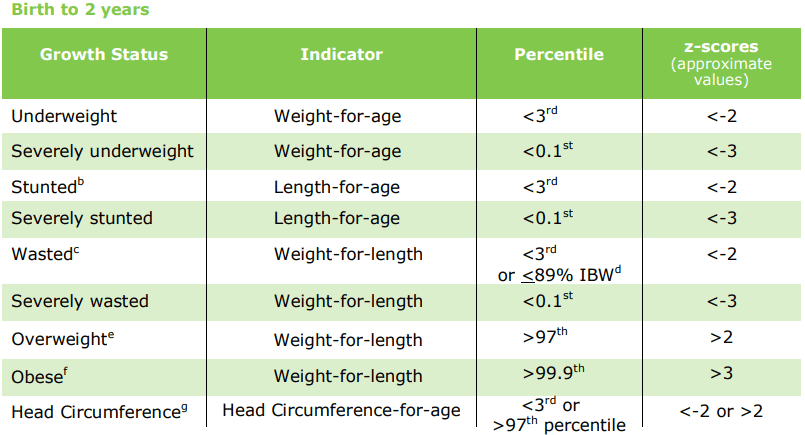
 These cut-offs are not diagnostic on their own but guide follow-up, monitoring, and intervention decisions.
Latest Blog Posts
Responsive Feeding: Why the Latest WHO Evidence Should Reinforce Your Clinical Practice
2026 AAP Clinical Practice Guideline on Faltering Weight in Children: What Pediatric Dietitians Need to Know
Which Children Are Good Candidates for a Blenderized Tube Feeding Diet?
FPIAP: Should We Always Eliminate Dairy? Exploring the “Watch and Wait” Approach
A Practical Framework for Assessing Picky Eating in Children
Feeding Preterm Infants After NICU Discharge: Practical Guidance for Dietitians